



What is Chipping Concrete? Understanding Ongoing Maintenance
Even if you work with concrete daily, you might not be familiar with every aspect of the maintenance your equipment requires. You may know hardened buildup needs to be chipped from ready mix drums and central mixers, for instance, but what does chipping concrete involve?
The term is often confused with chipped concrete, which generally refers to issues such as cracking, scaling or spalling. But concrete chipping is an intentional maintenance process used to remove hardened buildup from ready mix equipment. Here, we’re breaking down why buildup occurs, how the concrete chipping process works and tips concrete operations should know to keep fleets ready to roll.
The Importance of Removing Concrete Buildup
Concrete buildup is a natural result of putting ready mix equipment to work. Each time a truck hauls and delivers a load, a small amount of material remains behind inside the drum. The same is true for concrete blended in central mixers.
That material hardens, and additional residue collects over it with future pours. Over time, it can have tremendous impacts on your drums, mixers and overall operations. Keeping concrete buildup under control offers a number of benefits.
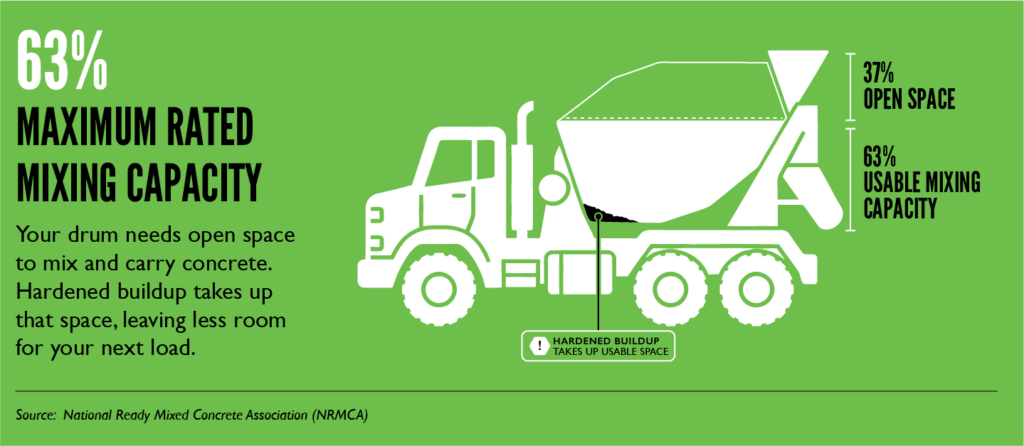
- Maintaining Available Capacity: Hardened concrete occupies drum space intended for fresh material. Removing buildup helps preserve the usable capacity your equipment was designed to provide.
- Eliminating Unnecessary Weight: Layers of hardened material add dead weight to drums and mixers. Left unchecked, it can lead to mechanical issues and impact fuel economy, costing your company more money with every mile traveled.
- Reducing Unnecessary Equipment Strain: Added weight and accumulated material increase demand on the equipment responsible for keeping your operation moving. This can result in budget-breaking repairs or replacements.
- Supporting Cleaner Operations: Removing old material from ready mix drums and mixers helps maintain cleaner working equipment and prevents hardened buildup from continuing to accumulate over time.
- Improved Blends: Caked-on concrete has the potential to break off inside a mixer drum and fall into wet material. This has potential impacts on the finished pour’s appearance and overall strength.
How the Concrete Chipping Process Works
The concrete chipping process refers to physically removing hardened concrete from the interiors of ready mix truck drums and central mixers. However, most service appointments incorporate a third practice, too: cement silo cleaning. During silo cleaning, crews remove clumped or hardened dry material that can restrict the flow of cement. Together, these services help address buildup across key equipment throughout a concrete operation.
Although each appointment and piece of equipment is different, a typical concrete chipping and cleaning appointment follows a general progression.
- Prepare the Equipment and Work Area: Before cleaning begins, equipment is taken out of service and crews follow safety procedures including lockout/tagout practices designed to prevent unexpected startup or movement. Warning signs are also placed in strategic locations, such as ready mix truck windows, to alert others that crew members are working inside the equipment. Chippers put on appropriate PPE and complete additional preparations before entering the work area.
- Access the Work Area: Trained crew members enter the drums, silos and mixers using procedures appropriate to that particular equipment and job site.
- Break Away Hardened Material: Inside ready mix drums and central mixers, chippers use handheld jackhammers to chip hardened concrete from interior surfaces and components. Silo cleaning focuses instead on breaking apart clumped or compacted dry material that can interfere with cement flow.
- Remove Loosened Material: Once buildup is broken free, crews remove the unwanted material so it no longer occupies space or restricts normal operation.
- Return Equipment to Service: After the cleaning is complete and the equipment has been properly cleared, it can return to work with the unnecessary buildup removed.
Please note: Although concrete chipping appointments can take place whenever works best for your operations, they traditionally occur during 12-hour overnight shifts. For more insight into the process, check out what a day in the life of a concrete chipper looks like.

Why Training and Safety Matter for Chipping Concrete
Chipping concrete safely involves much more than knowing how to operate a handheld tool. Workers may be performing physically demanding work inside confined equipment while managing dust, noise, vibration, flying material and other hazards. That combination makes professional training, proper PPE and established safety procedures especially important. Here are some of the primary considerations involved in chipping concrete.
- Respirable Crystalline Silica: Concrete contains crystalline silica, and chipping or jackhammering hardened concrete can generate respirable silica dust. OSHA identifies silicosis, lung cancer, COPD and kidney disease among the serious illnesses associated with respirable crystalline silica exposure.
- Noise Hazards: Pneumatic tools generate substantial noise, and working within a metal drum can create an especially challenging environment. Proper hearing protection and exposure controls are important considerations.
- Hand-Arm Vibration: Repeated use of vibrating hand tools can contribute to neurological and circulatory problems affecting the hands and fingers.
- Confined-Space Hazards: Ready mix drum interiors are confined spaces. Potential hazards must be evaluated and controlled, including equipment startup, ventilation, mobility and safe entry and exit.
These risks are why concrete chipping should never be treated as ordinary cleanup or attempted without a trained, licensed crew. Whether an operation needs traditional service or is considering express chipping needs for an emergency breakdown, speed should never replace proper training, safety practices and professional experience.
Building a Routine Concrete Chipping Schedule
Concrete buildup comes with the territory, but allowing it to accumulate indefinitely doesn’t have to. A consistent concrete chipping schedule can help prevent buildup from becoming a costly problem or critical afterthought. Industry experts typically recommend scheduling concrete chipping, central mixer cleaning and cement silo cleaning on a quarterly basis. Operations with especially demanding production schedules or buildup-prone materials may find that their concrete chipping schedule needs to be adjusted accordingly.
If it’s been a while since your last cleaning or you aren’t sure whether your equipment is due, reach out to General Chipping. We’re happy to answer your questions, help determine an appropriate schedule and keep your drums, silos and mixers serving you well.
FAQs: Concrete Chipping
-
When do concrete chipping appointments typically take place?
Traditional concrete chipping appointments typically take place during 12-hour overnight shifts. However, appointments can be tailored to accommodate a plant’s operating schedule, location, noise restrictions and other site-specific needs.
-
What services are included in a concrete chipping appointment?
A traditional concrete chipping appointment includes three primary services — ready mix truck drum chipping, central mixer cleaning and cement silo cleaning. These services are designed to address your system as a whole and keep every aspect working as it should.
-
How does chipping concrete help?
Concrete chipping removes hardened buildup that can add excess weight, reduce carrying capacity, affect pours and contribute to equipment wear, slowdowns or breakdowns. Silo cleaning also removes buildup, clumps and clogs that can restrict material flow and interfere with operations.
-
What information is needed to schedule concrete chipping?
When scheduling an appointment, educate your chipping company about any applicable details, such as fleet size, location and requested timeframe. Be sure to communicate any special considerations related to your equipment or site that the crew should know before arriving. For instance, how can your maintenance team access your plant? Are there noise restrictions to consider? Do any specific silos or mixers require added care?