


Dirty Jobs: Why Chipping Concrete is Harder Than it Looks
There’s something to be said for a hard day’s work, no matter what industry you’re in. Putting in the effort, overcoming challenges and seeing the results of a job well done can bring a real sense of satisfaction. But some jobs demand more than others — and when it comes to dirty jobs, concrete chipping ranks right up there with the toughest. Just ask Mike Rowe.
During Season 5 of the Discovery Channel’s “Dirty Jobs” TV show, the television host rolled up his sleeves and tried his hand at removing hardened concrete from the inside of a ready mix truck drum. After taking on hundreds of dirty, difficult and downright unpleasant assignments, Rowe later ranked concrete chipping at the top of his list of the dirtiest jobs he’d tackled.
Chipping concrete is demanding work, but it’s also an important part of keeping operations moving. What makes it such a challenge, and why does it take trained professionals to get the job done safely? Here, General Chipping’s concrete pros are taking a closer look at the hazards, precautions and expertise involved.
What is Chipping Concrete and Why is it Necessary?
Every load of ready mix concrete leaves a little something behind. Over time, material that remains inside truck drums and central mixers can harden along interior surfaces, creating buildup that takes up valuable space and adds unnecessary weight. Chipping concrete is the process of physically removing that hardened material, typically using handheld pneumatic jackhammers. Trained crew members enter the drum, break away accumulated concrete and remove the loosened material so the drum or mixer can return to work. For most concrete operations, scheduling chipping every three months is a good starting point for preventative maintenance.
The benefits of regular maintenance are substantial. Removing buildup helps restore usable mixing capacity, eliminate unnecessary weight, reduce strain on equipment and limit the risk of hardened material breaking loose and impacting future pours. Concrete chipping appointments also frequently include central mixer cleaning and cement silo cleaning. Together, these services work to look out for your system as a whole.
Concrete Safety: Understanding the Risks of Chipping Work
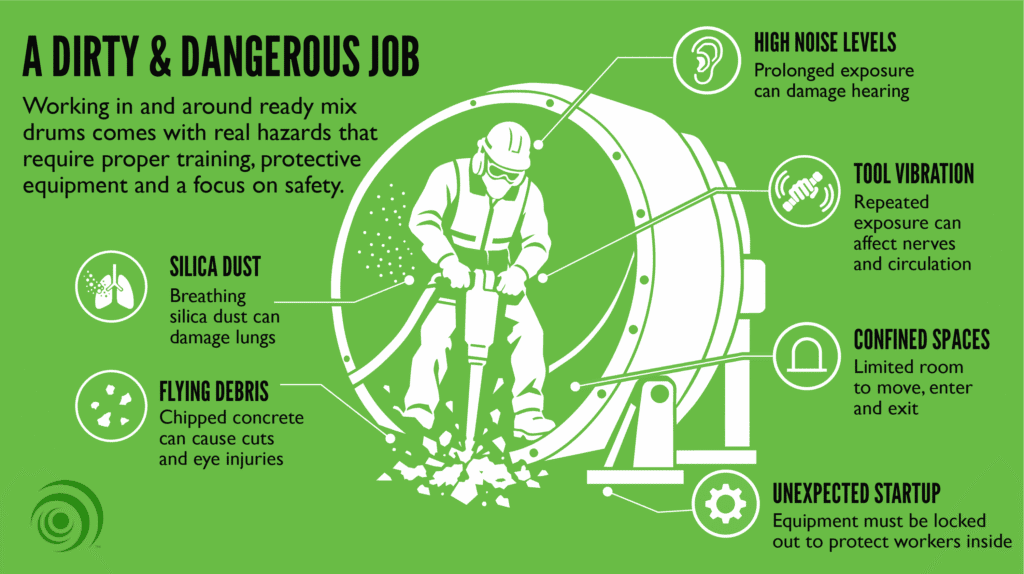
Concrete safety takes on a whole new level of importance when work moves inside a ready mix drum. Space is limited, movement can be difficult and the chipping process introduces hazards that require careful planning and appropriate safeguards. Here’s a look at some of the biggest concrete safety risks.
- Respirable Silica Dust: Chipping hardened concrete can release fine particles containing crystalline silica. When inhaled, this dust can penetrate deep into the lungs, potentially contributing to silicosis, lung cancer, chronic obstructive pulmonary disease (COPD) and other serious health conditions. Effective dust controls and appropriate respiratory protection are essential.
- Extreme Noise: Pneumatic jackhammers are loud on their own, but operating them inside a metal mixing drum creates an especially challenging noise environment. Without appropriate hearing protection and exposure controls, work can contribute to permanent hearing damage.
- Tool Vibration: Chipping concrete requires workers to handle powerful vibrating tools, often for extended periods. Repeated exposure can affect circulation, nerves and muscles in the hands and arms, making proper work practices and exposure management important.
- Confined Spaces: Ready-mix drums have narrow openings and limited room to maneuver. These conditions can complicate entry and exit, increase physical strain and make emergency response more difficult. Atmospheric hazards and heat stress may also be concerns.
- Flying Debris: As jackhammers break hardened concrete away from drum walls, fragments can fly or fall unexpectedly. Without proper eye, face, head and body protection, workers risk serious injuries.
- Unexpected Equipment Startup: Accidental drum movement while someone is working inside can have devastating consequences. Proper equipment isolation, lockout/tagout procedures and clearly placed warning signs help prevent machinery from being operated while maintenance is underway.
A comprehensive safety approach should account for everything from site conditions and confined-space procedures to equipment maintenance and emergency preparedness. If a serious injury occurs during a chipping appointment, stop work, alert the appropriate site personnel and call 911 when emergency assistance is needed. Follow the site’s emergency response plan, and never attempt a confined-space rescue without the appropriate training and equipment.
Choosing a Concrete Chipper: Why Experience and Training Matter
With so many potential hazards involved, concrete chipping isn’t a job for just anyone with a jackhammer. Choosing a qualified concrete chipper means finding professionals who understand both the equipment they’re maintaining and the conditions they’ll encounter. When evaluating a concrete chipping company, consider asking the following.
- How are your crews trained? Look for a concrete chipper that prioritizes hands-on instruction, equipment familiarity and ongoing safety education.
- What safety procedures do you follow? Ask how the company approaches confined-space entry, equipment isolation, dust exposure, hearing protection and emergency preparedness.
- What services can you handle? A provider equipped for truck drum chipping, central mixer cleaning and cement silo cleaning can help address multiple maintenance needs during a single appointment.
- How will you work around our schedule? Experienced providers understand that downtime affects production and should be prepared to discuss scheduling, site access and operational considerations.
- What experience do you have with equipment like ours? Familiarity with different truck drums, mixers and plant setups can help crews anticipate challenges and plan accordingly.
At General Chipping, our crews undergo regular training on OSHA safety requirements to help them navigate the unique challenges of working inside ready mix equipment. From proper preparation and protective equipment to established safety procedures, that education helps guide the way our teams approach each appointment.
Mike Rowe learned firsthand that concrete chipping isn’t for the faint of heart. Between the physical demands, tight working conditions and potential hazards, it’s a challenging job that requires skill, preparation and respect for the risks involved. Fortunately, your team doesn’t have to take on those challenges alone.
If you have additional questions about what goes into chipping concrete, or if you’re ready to get your next maintenance appointment on the books, feel free to reach out at any time. General Chipping’s experienced crews are ready to handle the dirty work and keep your fleet ready to roll.